Your Midnight Brain Is Lying to You About Your Work
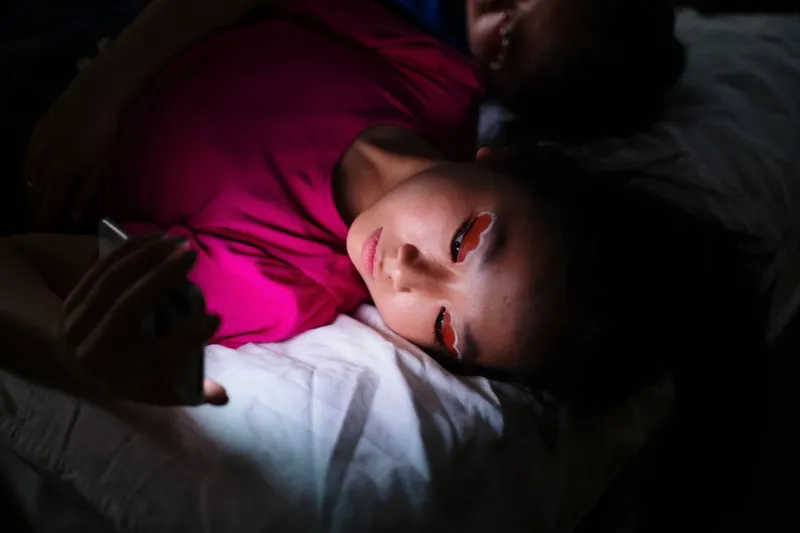
Somewhere between the last episode you didn't mean to watch and the alarm you haven't set yet, it happens. You open Instagram. Or TikTok. Or maybe you fall down a YouTube rabbit hole of creators who seem to have figured out everything you haven't. And within about four minutes, you've quietly decided that your work is mediocre, your progress is embarrassing, and you should probably just start over — or stop entirely.
I've been there more times than I'd like to admit. And for a long time, I thought those late-night revelations were my most honest ones. Like the exhaustion had stripped away all my ego and left me with clear-eyed truth. Turns out, that's almost exactly backwards.
The Science Behind the Scroll
Your body runs on a circadian rhythm — a roughly 24-hour internal clock that regulates everything from your core temperature to your mood to how well your prefrontal cortex is functioning. That last one matters a lot for creators, because the prefrontal cortex is the part of your brain responsible for rational thinking, perspective-taking, and — critically — accurate self-assessment.
In the evening, especially past 10 or 11 PM, that system starts powering down. Cortisol, which helps regulate stress response and alertness, drops. Meanwhile, the emotional centers of the brain stay relatively active, which means you're feeling things intensely while your ability to contextualize those feelings is running on fumes.
Then add the algorithm. Platforms like TikTok and Instagram are not neutral. They're specifically engineered to serve you content that provokes a reaction — and at night, when your emotional defenses are low and you're already in a passive, receptive state, that content hits differently. You're not browsing. You're absorbing. And what you're absorbing is a highlight reel of other people's best moments, curated to look effortless, served to you at the exact moment your brain is least equipped to put it in context.
That's not clarity. That's a setup.
Why 3 AM Feels Like the Truth
There's something seductive about late-night despair. It has the texture of honesty. When you're tired and your guard is down, it can feel like you've finally stopped lying to yourself — like the comfortable stories you tell during the day have fallen away and you're seeing things as they really are.
But emotional intensity is not the same as accuracy. Feeling something deeply doesn't make it true. The 3 AM version of you isn't more honest. She's just more vulnerable. And vulnerability, without the scaffolding of rest and rational thought, doesn't produce insight. It produces catastrophizing.
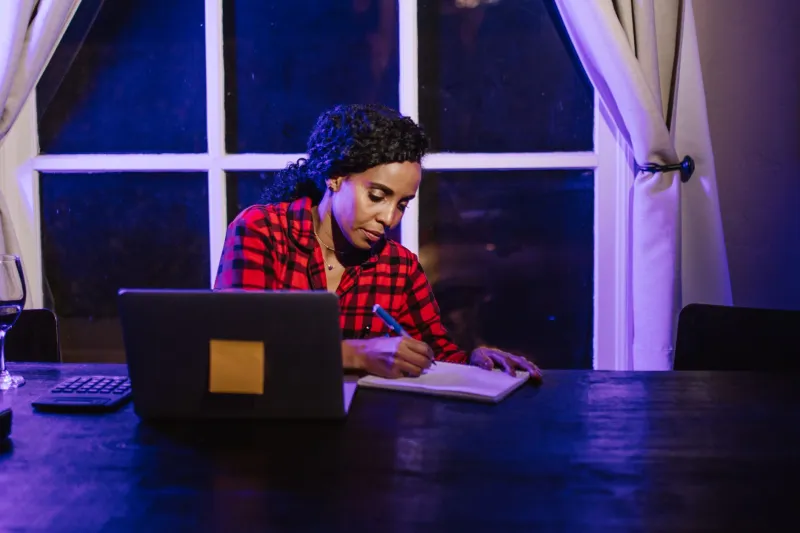
I've made creative decisions — or nearly made them — at midnight that I would never have considered at noon. Scrapping projects. Deleting posts. Rebranding from scratch because someone else's feed made mine look wrong. In the daylight, with coffee and a clearer head, those impulses looked completely different. Not brave. Not honest. Just tired.
The 3 PM Version of You Is the One to Trust
Here's a reframe that genuinely changed how I operate: your mid-afternoon self is your most reliable creative judge.
Research on cognitive performance consistently shows that most people hit a secondary peak in alertness and executive function in the mid-afternoon — typically between 2 and 5 PM, depending on your chronotype. This is when your emotional regulation is strongest, your working memory is solid, and your ability to hold multiple perspectives at once is at its best. It's when you can look at your work and actually see it, rather than projecting your exhaustion onto it.
If you want to evaluate whether a project is working, do it then. If you want to decide whether to pivot your creative direction, do it then. If you want to compare yourself to another creator and come away with something useful rather than something crushing, do it then — or honestly, maybe not at all, but that's a different essay.
Practical Things That Actually Help
Knowing the science is one thing. Changing the habit is another. A few things that have genuinely shifted my late-night spiral tendency:
Keep a "3 AM notes" folder. When a late-night thought feels urgent, I write it down somewhere separate — not in my actual project files, not in a draft, just a holding space. In the morning, I look at what I wrote. About 80% of it is garbage. The remaining 20% occasionally contains something worth exploring, but it needs to be evaluated in daylight before it earns any real estate in my brain.
Put a timestamp on your comparisons. Literally ask yourself: what time is it, and how long have I been on this app? If it's past 9 PM and you've been scrolling for more than twenty minutes, you are not in a position to make fair comparisons. You're not comparing your work to theirs. You're comparing your worst moment to their best one.
Create a "closed for assessment" window. I don't look at analytics, engagement numbers, or competitor content after 8 PM. That's not avoidance — it's scheduling. I'm not refusing to deal with reality; I'm choosing to deal with it when I'm actually equipped to.
Notice the physical cues. Tired eyes, a slightly hollow feeling in the chest, the particular kind of restlessness that makes you keep refreshing even though nothing new is there — these are signals that your brain is running on empty. They are not signals that your creative instincts have suddenly sharpened.
The Work Deserves a Fair Witness
One of the things I keep coming back to is this: your work deserves to be evaluated by someone who's actually paying attention. Not by the half-asleep, emotionally raw, algorithm-fed version of you that shows up when you should have put the phone down an hour ago.
You've put real effort into whatever you're building. Real thought, real time, real pieces of yourself. It deserves a fair witness — someone with enough rest and perspective to actually see it clearly. That someone is you, but not at midnight, and not while you're scrolling.
The comparison trap has always been sneaky. But it's sneakiest when it catches you in the dark, tired and alone with your phone, at the exact moment your brain is least able to fight back.
Close the app. Go to sleep. Your work will still be there in the afternoon, and so will a version of you who can actually see it straight.