It Has Your Name On It: Protecting Your Creative Identity When the Algorithm Wants Something Else
Photo: independent artist working alone in creative studio with personal artwork on walls, via logos-world.net
There was a specific Tuesday — and yes, I know how that sounds — when I sat at my desk and realized I had spent three weeks making things I didn't actually care about. Not because someone told me to. Not because a client asked. I had just watched enough videos, scrolled enough feeds, and absorbed enough "creator tips" content that I had quietly, almost invisibly, started making work for an imaginary audience instead of for myself.
It happens so gradually you almost miss it.
One day you're making something because it genuinely excites you. The next, you're tweaking the format because a video you watched said "hooks need to land in the first two seconds." Then you're changing the color palette because that aesthetic is doing numbers right now. Then you're picking a topic not because you have something to say about it, but because you saw the search volume and thought, well, why not?
And then one Tuesday you look at what you made and you don't recognize it.
The Slow Erosion Nobody Talks About
We talk a lot about burnout in creative spaces — the exhaustion, the output grind, the feeling of running on empty. What we talk about less is the identity erosion that happens before the burnout even hits. The quiet process of sanding yourself down to fit the shape the internet prefers this season.
Trend-chasing isn't always obvious. It doesn't always feel like selling out. Sometimes it just feels like being smart. Like being strategic. Like understanding the landscape. And some of that is genuinely useful — knowing your audience, understanding what resonates, paying attention to the cultural moment you're creating inside of. That's not the problem.
The problem is when the strategy starts making decisions that should belong to your instincts.
I've talked to so many independent creators — writers, illustrators, photographers, podcasters — who describe a version of the same experience. They started something because they had a specific vision. Then they got a little bit of traction, and suddenly the feedback loop kicked in. The things that got the most response weren't always the things they were most proud of. And over time, they started making more of what got the response and less of what they were actually proud of.
Until one day the work felt like a costume.
What "Owning" Your Work Actually Means
When I say reclaiming ownership of your creative work, I don't just mean copyright. I mean something more fundamental: the ability to look at something you made and say, that could only have come from me.
That quality — the specificity of a voice, a perspective, a way of seeing — is the only thing that actually can't be replicated or trend-cycled away. It's also the thing that gets most diluted when you're optimizing for virality.
Because viral isn't really about you. Viral is about timing, platform mechanics, collective mood, and a thousand other variables you can't control. The work that lasts — the stuff people come back to, share years later, build actual communities around — tends to be work that has a distinct human fingerprint on it. Work that sounds like somebody specific made it.
Your weirdness is not a liability. It is, genuinely, the asset.
Some Practical Ways to Stay Grounded
I'm not here to tell you to ignore your analytics or pretend the algorithm doesn't exist. That's not realistic, and honestly, it's not even necessary. You can be aware of the landscape without letting it colonize your creative process. Here's what has actually helped me.
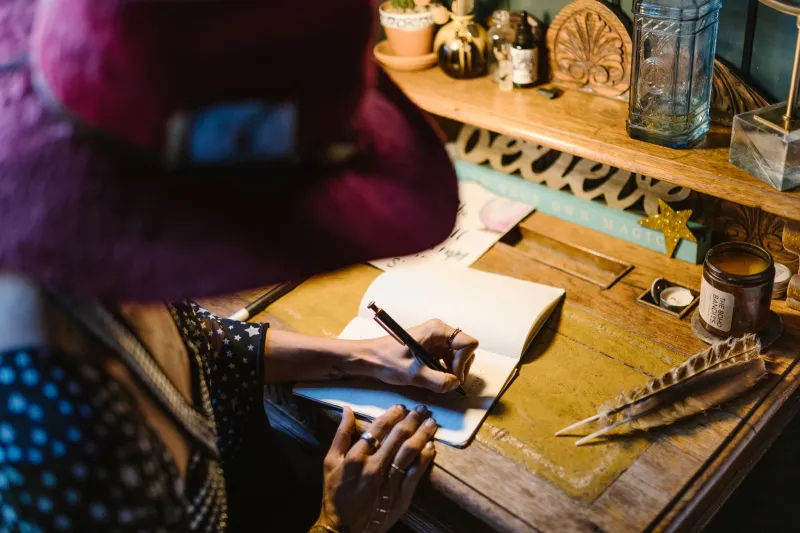
Create something with no audience in mind first. Before you open a project with distribution in mind, spend some time making something that lives only for you. A journal entry, a sketch, a voice memo, a draft nobody will see. It recalibrates your internal compass in a way that's hard to explain but very easy to feel.
Ask yourself whose voice is in your head when you make decisions. Is it yours? Or is it the creator you watched three tutorials from last week? There's a difference between being influenced and being overwritten. Get curious about where your choices are actually coming from.
Keep a "this is mine" file. Sounds simple. It is simple. It's a running document or folder where you save the work you're most personally proud of — not the work that performed best, but the work that felt most like you. Look at it when you feel yourself drifting. It's a compass.
Take breaks from consuming other people's work in your medium. This one is uncomfortable because it can feel like falling behind. But there is real value in periods of creative fasting. You start hearing your own thoughts more clearly when you're not constantly marinating in everyone else's.
The Liberation in the Claim
Here's the thing about saying "this is mine" — it's not a defensive act. It's not about shutting the world out or refusing to grow or change. It's actually the most expansive creative stance you can take.
When you stop trying to be what the algorithm wants and start doubling down on what only you can make, something shifts. The work gets stranger, maybe. More specific. Less broadly appealing in some ways. And also, weirdly, more magnetic to the people who actually needed it.
Your people — your real audience, the ones who will stick around — they're not looking for the trend. They're looking for the voice. They're looking for the work that has a name on it and means it.
Go make that work. Loudly, specifically, unapologetically yours.