Every Time You Look Over There, You're Stealing From Over Here

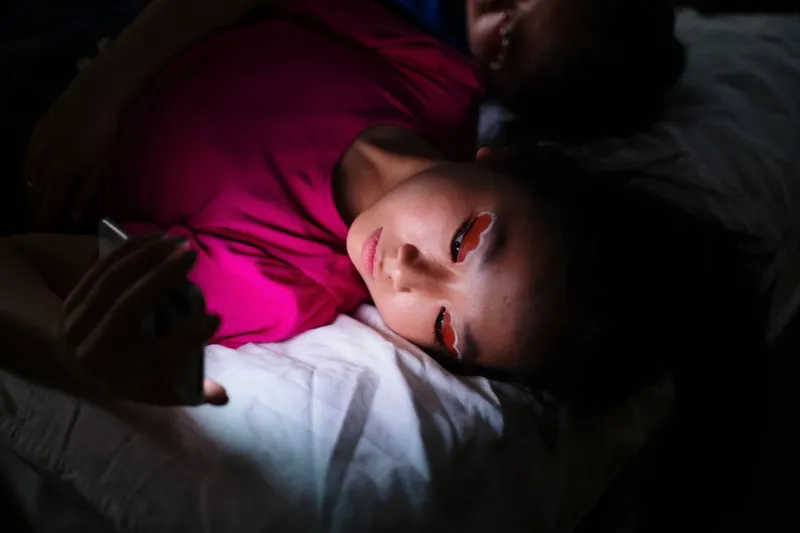
I had a whole plan for a piece I was working on last spring. It was strange and personal and a little structurally unconventional, and I was genuinely excited about it in that low-hum way that usually means something real is happening. Then I made the mistake of spending forty-five minutes on Instagram, and by the time I came back to my desk, the piece felt wrong. Too weird. Too niche. Not the kind of thing that performs.
I shelved it.
A version of that story happens to creative people every single day, and most of us don't even notice it because the mechanism is so quiet. We don't think of ourselves as being derailed by comparison. We think we're just staying informed, just seeing what's out there, just doing research. But there's a tax being levied on your work every time you check what someone else is doing, and it's more expensive than you think.
Your Brain Was Built for This, and That's the Problem
Here's the uncomfortable truth: comparison isn't a character flaw. It's a feature. Human brains are wired to benchmark constantly—against peers, neighbors, colleagues, strangers on the internet who happen to share your general category of ambition. Psychologists call it social comparison theory, and it dates back to research from the 1950s. Leon Festinger basically proved that people have a fundamental drive to evaluate themselves by measuring against others, especially when objective standards are unclear.
Creative work is basically the least objective thing that exists. There's no standardized test for whether your essay is good, no universally agreed-upon metric for whether your art is landing. So your brain, desperately searching for some kind of anchor, reaches for the easiest available one: what's working for them.
The problem is that "what's working for them" is not the same thing as "what's true for you." And when you start optimizing for someone else's benchmark, you gradually stop trusting your own.
The Subtle Costs Nobody Talks About
The obvious cost of comparison is time. Sure, the scrolling and the stalking and the rabbit holes eat hours you could've spent making things. But I'd argue the sneakier costs are way more damaging.
Decision erosion. Every time you second-guess a creative choice because it doesn't look like what's getting traction elsewhere, you're practicing distrust of your own instincts. And like any skill, distrust gets better with repetition. After a while, you stop even making the unconventional choice in the first place—you preemptively edit yourself before anyone else gets the chance.
Voice dilution. Your creative voice is basically the sum of every weird, specific, particular thing about how you see the world. It's the thing that makes your work yours. When you're constantly marinating in someone else's approach, their cadence and their aesthetic and their priorities start leaking in. It's not plagiarism—it's subtler than that. It's the slow erosion of the rough edges that make you distinct.
Risk aversion. The best creative work almost always involves taking a swing that might not connect. But comparison makes you hyper-aware of what's already proven to work, which makes the unproven stuff feel reckless rather than exciting. You stop pitching the weird idea. You stop writing the piece that doesn't have a clear audience. You start chasing precedent instead of making it.
That piece I shelved? I went back to it six months later and finished it. It got more genuine responses than almost anything else I'd put out that year. The strangeness wasn't the problem. My fear of the strangeness was the problem.
How Creators Who Last Actually Handle This
I've noticed something about the creative people I genuinely admire—the ones who've built something durable and distinctly theirs. They're not oblivious to what's happening in their space. They're not hermits. But they've developed what I can only describe as a kind of strategic myopia. They look outward with intention and with limits, and they look inward constantly.
A lot of them talk about keeping some version of a private record—a journal, a notes app, a folder of drafts—that exists entirely outside of any external feedback loop. A place where the work doesn't have to perform or compete or justify itself. Where the only question is does this feel true, not will this do numbers.
Some of them have also gotten really disciplined about the difference between inspiration and comparison. Inspiration is when you encounter someone else's work and it opens something up in you—it makes you want to make your thing. Comparison is when you encounter someone else's work and it closes something down—it makes you feel behind, lesser, or like your thing isn't worth making. One of those is fuel. The other is a slow leak.
Learning to tell the difference in real time is a skill, and it takes practice. But it starts with being honest about how you feel when you close the tab.
Redirecting the Energy
So what do you actually do with the competitive impulse? Because suppressing it entirely doesn't work—it just goes underground and turns into resentment or paralysis.
The move I've found most useful is turning that benchmarking energy back on yourself. Specifically: compare yourself to earlier versions of your own work. Where were you six months ago? A year ago? What could you do then that you can do better now? What were you afraid to try then that you've since attempted?
This isn't toxic positivity or self-congratulation. It's actually a more accurate and more actionable form of measurement, because you're the only variable in the equation. You're not accounting for someone else's resources, their timing, their audience size, their team, their decade of head start. You're just looking at your own trajectory.
And your trajectory is the only one you can actually do anything about.
The Piece I Almost Didn't Write
I think about that shelved piece a lot—not because it was my best work, but because it almost didn't exist. It almost got eaten by a forty-five minute scroll session and a brain that temporarily forgot what it was trying to do.
How many pieces have you almost not written? How many projects have you quietly talked yourself out of because someone else was already doing something adjacent, or doing something louder, or doing something that looked more like success from the outside?
The comparison tax is real, and it's compounding. Every time you look over there to check how you're doing, you're pulling attention—and energy, and courage, and creative capital—away from the work that actually has your name on it.
Your name. Not theirs.
That seems worth protecting.