The Invisible Ceiling You Built While Studying Your Favorites
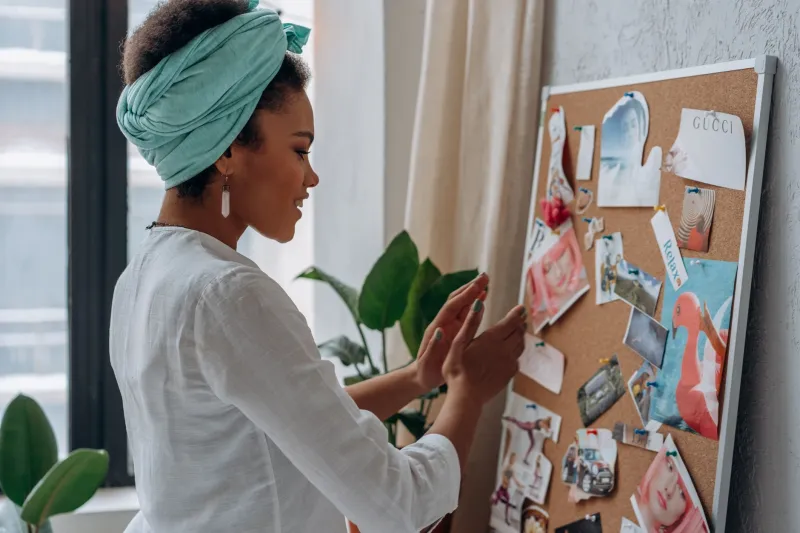
Here's a confession most creators won't make out loud: the person whose work you've studied the hardest might be the exact reason your own work feels a little… off. Not because they're doing anything wrong. Not because admiration is bad. But because there's a specific kind of creative shrinkage that happens when you spend too much time inside someone else's world.
It doesn't feel like copying. It feels like learning. And that's exactly what makes it so sneaky.
The Difference Between a Map and a Ceiling
When we discover a creator who does something that genuinely moves us — a writer whose essays make our chest ache, a photographer whose framing feels like a secret language, a podcaster who somehow says the exact thing we'd been trying to think — the instinct is to study them. Pull them apart. Figure out how they do the thing they do.
That instinct is not wrong. Apprenticeship, even the informal kind, is one of the oldest ways humans have passed craft down. You're supposed to learn from people who are further along than you.
The problem comes when the map becomes the ceiling.
A map shows you how someone else got somewhere. A ceiling is what stops you from going higher than the person you're studying. And a lot of creators — without realizing it — are operating under a ceiling they voluntarily installed, built plank by plank from their hero's aesthetic choices, content rhythms, and worldview.
You start writing in their cadence. You adopt their paragraph length. You notice you're avoiding topics they'd never touch, not because those topics don't interest you, but because they don't fit the vibe you've absorbed. You're not imitating them consciously. You're just... inside their frequency, and you forgot to tune back to your own.
Why Your Brain Does This Without Asking
There's a psychological concept called behavioral mirroring — we unconsciously adopt the gestures, speech patterns, and rhythms of people we admire or want to connect with. It's a social bonding mechanism. And when you spend hours consuming someone's creative output, your brain starts treating their style as a kind of social norm to conform to.
Add to that something researchers call "anchoring" — the tendency to rely heavily on the first piece of reference information we encounter when making decisions. If the first thing you do when you sit down to create is scroll through your favorite creator's feed for "inspiration," you've just dropped an anchor. Everything you make afterward is going to drift toward that anchor, whether you want it to or not.
None of this is a character flaw. It's just how human brains work. The question is whether you're going to let it run unchecked.
The Specific Ways Admiration Makes Your Work Smaller
Let's get concrete, because this shows up in really particular ways:
You self-edit before you even start. You have an idea, and before it's even fully formed, you're already filtering it through the lens of whether your favorite creator would do something like this. They wouldn't. So you drop it.
You mistake their limitations for universal rules. Every creator has things they don't do — topics they avoid, formats they skip, risks they don't take. Those are their choices, shaped by their life and their audience. But when you've been studying someone closely, their personal no-fly zones can start to feel like industry law.
Your aesthetic vocabulary shrinks. You start making visual or tonal choices not because they feel true to you, but because they rhyme with the person you've been studying. Your color palette, your sentence length, your sense of humor — all of it quietly migrates toward theirs.
You measure your work against their output instead of your own vision. This one is brutal. You finish something and your first instinct is to hold it up next to their work to see how it compares. But you're not them. You're not trying to make their thing. Measured against their standard, your most original work will always look strange.
How to Learn Without Getting Absorbed
None of this means you should stop studying creators you love. It means you need to change the sequence and the intention.
Create before you consume. This is the single most effective shift you can make. Before you open anyone else's newsletter, anyone else's feed, anyone else's video — make something. Even a paragraph. Even a voice memo. Give your own frequency a chance to be the loudest thing in the room before you let someone else's in.
Study craft, not personality. When you're analyzing a creator you admire, be ruthlessly specific about what you're actually trying to learn. Are you trying to understand how they structure an argument? How they use white space? How they build tension? Extract the technique and leave the personality behind. The technique is transferable. The personality isn't yours to take.
Deliberately read outside your genre. If you're a lifestyle blogger, study a war correspondent. If you're a graphic designer, read poetry. Cross-pollination is where genuine originality tends to live. Your heroes are probably doing this too — they just don't always talk about it.
Do a "source audit" every few months. Look at who you've been consuming most heavily. Ask yourself honestly: do you see their fingerprints on your recent work? Not as a judgment, just as data. If the answer is yes, it might be time to take a break from their content and see what comes through when they're not in the room.
Your Work Has a Frequency They Can't Broadcast
Here's the thing about your favorite creator: they can't make your work. They don't have your specific combination of experiences, obsessions, embarrassments, and half-baked theories. They don't have your weird Tuesday afternoons or your specific brand of stubbornness. Their aesthetic, however beautiful, will always be a costume on you.
The goal was never to make something that sounds like them. The goal was to figure out what you sound like — and then make that thing louder.
Study your heroes. Pull them apart. Learn everything they'll teach you. And then close the tab, sit down with your own strange, specific self, and make the thing only you can make.
That's the work. Everything else is just research.