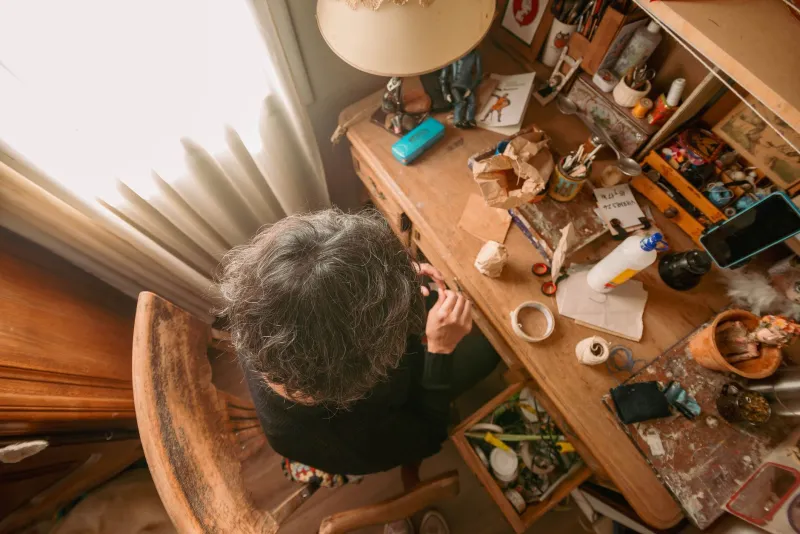
Nobody Claps for the Tuesday Afternoons
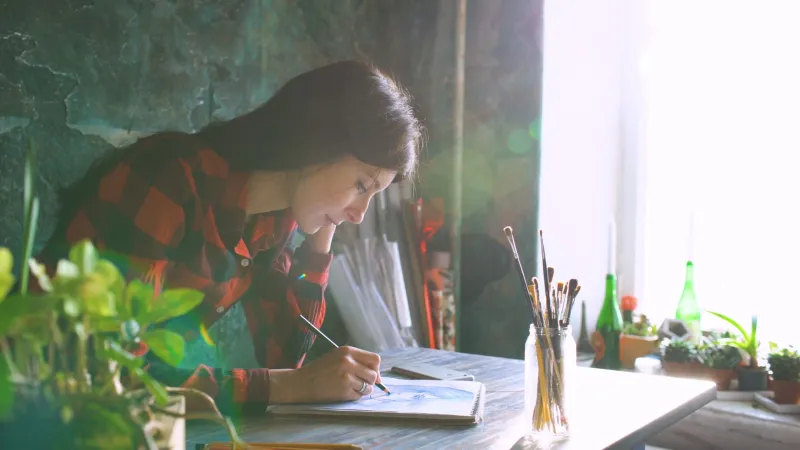
Here's what the launch post never says:
It doesn't mention the eighteen months of drafts that went nowhere. It doesn't credit the Wednesday nights when the creator almost quit, or the version of the project they scrapped entirely after pouring six months into it, or the years of work they did before anyone paid attention — work that looked, from the outside, like nothing at all.
The launch post says: I'm so excited to finally share this with you.
And it's genuine. But "finally" is doing an enormous amount of heavy lifting in that sentence.
The Story We Keep Telling About Creative Success
Our cultural narrative around creative breakthroughs has a pretty consistent shape. Someone has an idea. They work hard. Something clicks. People notice. Success arrives.
It's a good story. Clean, motivating, shareable. It fits neatly into a caption or a podcast interview or a keynote slide. The problem is that it leaves out the largest, most formative part of the actual experience — the long, invisible middle, where nothing is clicking and nobody is noticing and the creator is just... doing the work anyway.
We've built an entire media ecosystem around the moment of arrival. The book deal announcement. The viral post. The sold-out show. These are the events that generate content, so they're the events that get documented and shared and celebrated. The decade of practice that made the arrival possible? That's not a moment. It doesn't have a graphic. It doesn't get a thread.
And when we only see the arrivals, we start to believe that's what the creative life mostly looks like — a series of visible wins, each one building on the last. What we're actually seeing is survivorship bias dressed up as inspiration.
What the Invisible Work Actually Looks Like
Let me be specific, because "invisible work" can sound abstract until you name it.
It's the illustrator who spent four years posting her drawings to an account with 200 followers, refining her style in public to an audience that wasn't really watching yet. It's the podcaster who recorded 80 episodes before his download numbers started to reflect the quality of what he was making. It's the novelist who finished two complete manuscripts that will never be published before she wrote the one that was.
It's the blogger who wrote consistently for three years before a single post got meaningful traffic. The ceramicist who threw hundreds of pots she considered failures before she understood her own aesthetic. The songwriter who spent a decade playing small venues in the Midwest before anyone outside her city knew her name.
None of this makes it into the success story, because none of it is the success story. It's the precondition. It's the unsexy, unshared infrastructure that everything else gets built on top of.
And here's what I find genuinely fascinating about it: in almost every case, the creators who sustain something meaningful over time will tell you that the invisible years weren't just necessary — they were formative in ways that the visible wins never could have been. The obscurity wasn't a waiting room. It was a workshop.
Why We've Romanticized the Wrong Part of the Process
Hustle culture, for all its exhausting energy, got one thing accidentally right: the idea that sustained effort matters. Where it went sideways was in making that effort performative. Suddenly it wasn't enough to do the work — you had to be seen doing the work, documenting the grind, sharing the 4 a.m. sessions and the stack of books on your desk.
The aesthetic of hard work replaced the actual practice of it. And in the process, the quiet, private, unglamorous version of creative effort started to feel insufficient. Like if nobody was watching you do it, it didn't quite count.
This is backwards. Some of the most important creative work anyone ever does happens in conditions of near-total obscurity — not because obscurity is inherently virtuous, but because it removes a particular kind of pressure. When no one is watching, you can experiment without the cost of public failure. You can make bad work, learn from it, and try again without the whole thing becoming a story someone else tells about you.
The creators who build genuine authority in their field almost always have a long stretch of that kind of private practice behind them. Not private because they were hiding, but private because the audience hadn't arrived yet — and they kept going anyway.
Reframing the Unglamorous Middle as the Actual Point
I want to suggest a small but meaningful shift in how we think about the creative process, especially for independent creators who are somewhere in the middle of building something.
What if the invisible work isn't the price you pay to get to the good part?
What if it is the good part?
Not in a "embrace the struggle" motivational poster way. More practically than that. The period when you're working without a significant audience, without external validation, without the pressure of expectations — that's when your creative instincts develop most freely. You're not making work for approval because approval isn't really on the table yet. You're making it because you're compelled to, because you're curious, because you're trying to figure something out.
That's where voice comes from. That's where style comes from. That's where the particular, irreplaceable quality of your work develops — in the Tuesday afternoons when nobody's watching and you're just showing up because that's what you do.
The creators who try to skip this phase by manufacturing visibility before the work is ready often end up with an audience before they have anything durable to offer it. The foundation wasn't built. The invisible middle got outsourced to content strategy, and what looks like a fast track sometimes turns out to be a shortcut to a dead end.
Showing Up When the Room Is Empty
There's a specific kind of creative courage that doesn't get nearly enough credit: the courage to keep making things when the response is minimal, when the metrics are discouraging, when it genuinely feels like you're working in a vacuum.
It's not dramatic courage. It doesn't make a good story. But it's the kind that actually builds something lasting.
The overnight successes you admire almost universally have a long, boring, private backstory. The ten years of practice before the debut. The failed projects before the one that worked. The Tuesday afternoons, and the Wednesday afternoons, and the Thursday afternoons — stacked up quietly, invisibly, over years.
Nobody claps for those afternoons. But they're the whole foundation.
Keep showing up for yours.