I Got Tired of Waiting for Someone to Hand Me the Mic
The Shelf Where Good Things Went to Wait
I had a list. Not a to-do list — more like a holding pen. Ideas I was saving for when I felt more established. Projects I'd launch once I had a bigger platform. Opinions I'd share publicly as soon as I had the credentials to back them up. The list was long. Years long, honestly.
What I didn't understand at the time was that I was waiting for something that doesn't exist: a moment when someone with more authority than me would lean over, tap me on the shoulder, and say now. You're ready now. Go ahead.
That moment never came. And I'm willing to bet yours hasn't either.
What Permission Actually Looks Like (When You're Honest About It)
Here's the thing nobody really says out loud: the permission we're waiting for isn't usually a formal credential or a job title. It's subtler than that. It shows up as:
- Refreshing your follower count before posting something vulnerable
- Describing yourself as someone who "kind of" writes, or "dabbles" in art
- Waiting until a project is more polished before mentioning it exists
- Prefacing your opinions with "I'm no expert, but..."
I did all of these. Constantly. And I genuinely didn't recognize it as permission-seeking because it felt like humility. It felt responsible and measured. What it actually was, I'd come to realize, was a very sophisticated way of staying small without having to admit I was scared.
There's a particular flavor of this that I think a lot of women recognize. We're conditioned — and I know that word gets overused, but I mean it literally here — to frame our ambitions as suggestions. To soften the edges of our confidence so nobody feels threatened by it. To be good at things quietly and wait for someone else to announce it on our behalf. The gatekeeping isn't always external. A lot of it lives inside us, wearing the face of politeness.
The Specific Moment I Got Annoyed Enough to Stop
I can actually pinpoint when things shifted for me. I was on a call with someone I respected — a peer, not a boss, not a mentor — and they were talking about a project that was almost identical to something I'd had sitting in that mental holding pen for over a year. Same general territory. Similar audience. And I remember feeling this hot, quiet flash of something that wasn't quite jealousy but was adjacent to it.
Not because they were doing it wrong. They were doing it fine. But because I had been waiting — for what, exactly? — while someone else just... started.
I didn't say anything on the call. But afterward I sat with that feeling instead of shaking it off, which is what I usually did. And I asked myself a question that turned out to be pretty uncomfortable: What am I actually waiting for?
I couldn't answer it. There was no coherent response. No milestone I was tracking toward, no specific person whose approval I was seeking. I was just waiting. Out of habit. Out of the belief, somewhere below conscious thought, that starting without permission was presumptuous.
That was the moment I decided to get annoyed about it instead of accepting it.
What I Did Differently (And It Wasn't Confidence)
I want to be careful here because there's a version of this story that turns into a motivational poster, and that's not what happened. I didn't suddenly feel confident. I didn't have a breakthrough that dissolved my self-doubt. What I had was irritation, and I used it.
The first thing I did was stop softening my language. Not forever, not in every context — but I started paying attention to when I was doing it unnecessarily. When I was adding "I think" and "maybe" and "I could be wrong" to sentences that didn't need that cushioning. I started letting statements be statements.
The second thing was less glamorous: I published something before I thought it was ready. Not recklessly — I'm not talking about putting out work you haven't thought through. I mean I stopped using not ready as an indefinite delay tactic. I set a date. I hit publish. The piece wasn't perfect. People read it anyway.
The third thing was the hardest. I stopped framing my creative work as a hobby in conversations where I actually meant it to be taken seriously. That one required more rewiring than I expected, because the habit ran deep. Calling something a hobby is armor. It means you can't really be judged for it. Calling it your work means you're claiming it — and claiming things feels presumptuous when you've been trained to wait for someone else to claim them on your behalf.
The Invisible Gatekeepers We've Built Ourselves
Here's what I've come to believe: most of the gatekeepers we're waiting on aren't real. Or rather, they're real in the sense that systems of gatekeeping exist — they absolutely do — but the specific person or moment we're waiting for, the one who will officially certify us as worthy of taking up space? That's a construction. We built them. We keep them employed.
Recognizing that is both freeing and a little annoying, because it means the delay was mostly self-imposed. Which is uncomfortable to sit with. But it also means the door was never actually locked.
I'm not going to tell you to just believe in yourself, because that's not actionable and frankly it's a little insulting. What I will say is this: find the specific sentence you keep saying to minimize your own work, and stop saying it. Find the project on your shelf, the one you've been saving for when you feel more legitimate, and ask yourself what legitimacy actually looks like. Then ask yourself if that bar is real or if you invented it.
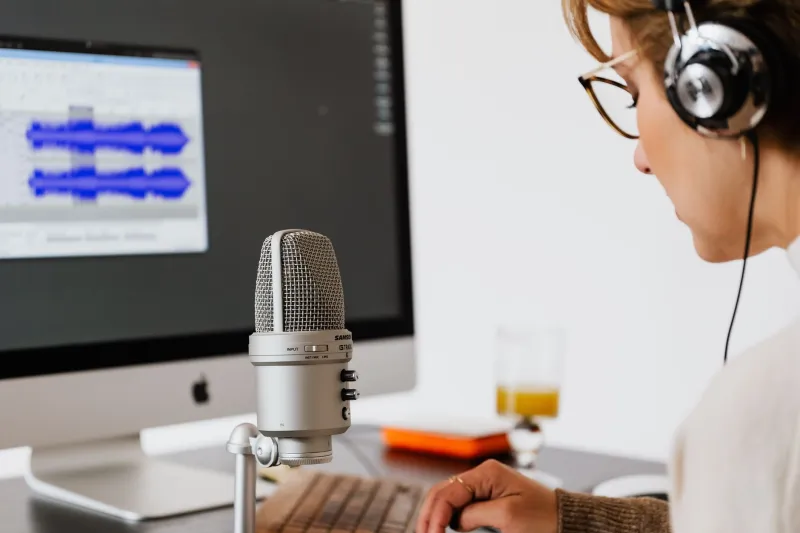
The mic doesn't get handed to you. You pick it up, feel weird about it for a minute, and then you start talking.
That's the whole secret. I wish it were more complicated, but it's really not.