The Hidden Price Tag on Every Scroll: What Comparison Is Really Costing Your Creative Brain

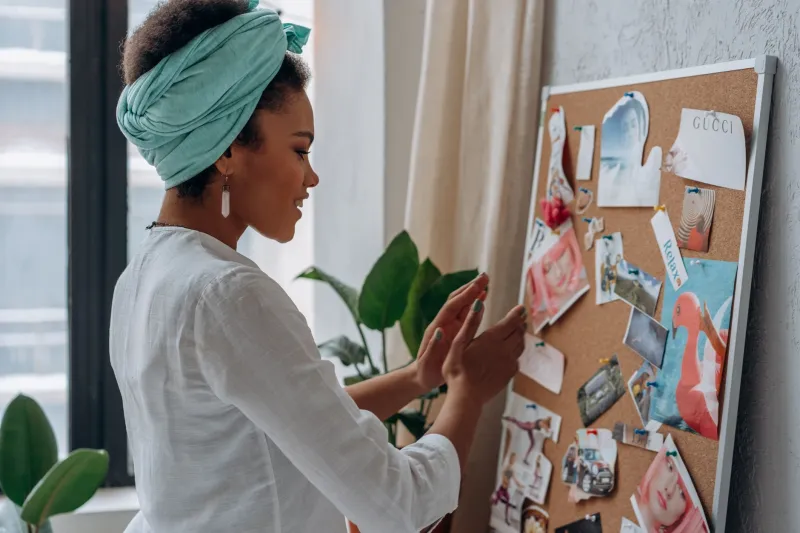
Photo by Photo by Vitaly Gariev on Unsplash on Unsplash
Let me paint you a picture. It's 9 a.m. You sit down to work. You've got coffee, a fresh document open, maybe some ambient music going. You're ready. And then — almost without noticing — you pick up your phone. Just a quick check. Just to see what's out there. And forty-five minutes later, you're still scrolling, your coffee is cold, your document is blank, and somewhere in the back of your chest there's this low-grade hum of anxiety that wasn't there before.
That hum has a name. I call it the comparison tax.
It's not a metaphor. It's a real cost your brain is paying every single time you run your work up against someone else's — and the bill is bigger than most of us realize.
What's Actually Happening in Your Head
Here's the science, minus the textbook voice: your brain has a limited pool of what researchers call cognitive resources — essentially, mental bandwidth. When you consume content passively, especially content that triggers social comparison, your brain activates the same threat-response circuitry that lights up when you feel physically unsafe. Your amygdala doesn't know the difference between a predator and a competitor with better engagement numbers. It just knows you feel threatened, and it starts allocating resources accordingly.
What that means practically is that the creative, generative, associative part of your brain — the part that makes original work — gets less fuel. You're running on fumes by the time you actually try to create something.
And it compounds. Neuroscientists who study media consumption have found that passive, algorithmically-driven content exposure doesn't just drain attention in the moment — it actually reshapes the neural pathways associated with original thought over time. The more your brain is trained to receive input in rapid, fragmented bursts, the harder it becomes to generate sustained, coherent ideas. You're essentially training yourself out of your own creativity.
The Algorithm Isn't Neutral
Here's the part that doesn't get talked about enough: the feed you're scrolling isn't a random sample of the creative world. It's a curated funnel designed by engineers whose entire job is to keep you emotionally activated and on-platform. That means you're not seeing a balanced picture of what's possible — you're seeing the work that performed best, the creators who figured out the formula, the content that made people react.
So when you're comparing your messy process to their polished output, you're not comparing apples to apples. You're comparing your rough draft to someone else's highlight reel that was specifically engineered to make you feel like you're behind. The comparison isn't just unfair — it's rigged.
And here's the kicker: the more you engage with those feelings (even negatively — even by spending time feeling bad about what you saw), the more the algorithm learns to show you content that produces that same emotional spike. You're not just watching the game. You're funding it.
Passive Scrolling vs. Strategic Study — They Are Not the Same Thing
I want to be careful here, because I'm not saying you should never look at other people's work. That would be absurd. Studying creators you admire is how you develop taste, context, and craft. The question is how you're doing it.
Passive scrolling is reactive. You're letting the algorithm choose what you see, when you see it, and how much of it you consume. You have no agenda. You're just absorbing.
Strategic study is intentional. You decide in advance what you're looking at and why. You're watching a specific creator's work to understand their structure, or reading a particular writer to study their pacing, or analyzing a campaign because you want to understand why it worked. You're an active participant in the experience, not a passenger.
The difference in cognitive outcome is significant. Active, intentional study actually builds creative capacity — it gives your brain new frameworks, new connections, new raw material. Passive consumption just floods the system with noise.
Some questions worth asking yourself before you open any feed:
- Do I have a specific thing I'm looking for right now?
- Is this consumption in service of a current project, or am I just killing time?
- How do I typically feel after spending thirty minutes here?
If you can't answer the first question, consider that your sign to close the app.
A Framework for Recalibrating
Recovering your creative instincts after a long stretch of heavy consumption isn't complicated, but it does require some intentional friction.
Give your brain input-free time. This sounds obvious, but it's genuinely rare. Take a walk without headphones. Sit with your coffee without your phone. Let your mind wander without immediately feeding it more content. This is where your actual ideas live — in the gaps.
Create before you consume. Make it a non-negotiable rule that you touch your own work before you look at anyone else's. Even fifteen minutes of writing, sketching, or building before you open any feed protects your creative state for the day.
Audit your follows. Not for quality, but for emotional impact. Ask yourself honestly: how do I feel after I look at this person's work? Inspired and energized is great. Hollow and behind is a red flag. You're allowed to unfollow people whose work makes you feel worse about your own — even if their work is objectively excellent.
Batch your research. If you use social platforms for legitimate creative research, designate specific times for it. Don't let it bleed into your creative hours. Treat it like a meeting you schedule, attend, and then leave.
The Real Cost
The comparison tax isn't just about the forty-five minutes you lost this morning. It's about the cumulative erosion of confidence in your own creative instincts. The longer you run your ideas through the filter of what's already out there, the harder it becomes to trust what's in your own head.
And your own head — unfiltered, weird, specific, and yours — is the only place your best work actually comes from.
The scroll will always be there. Your original ideas have a shorter shelf life than you think. Choose accordingly.