The Drafts You Never Published Know You Better Than Your Portfolio Does
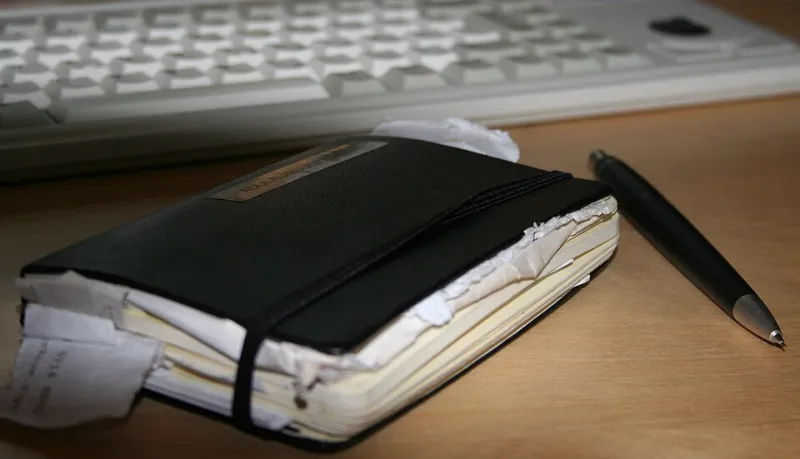
Photo: Alexandre Dulaunoy from Les Bulles, Chiny, Belgium, CC BY-SA 2.0, via Wikimedia Commons
Open almost any creative person's portfolio and you'll find the same thing: the hits. The polished pieces. The work that came together and got finished and felt safe enough to share with the world. It's clean. It's intentional. It represents, in some carefully curated sense, the best of what that person can do.
Now imagine opening their drafts folder instead.
That's where things get interesting.
The Curation Problem Nobody Talks About
We've all absorbed the logic of the highlight reel — show your best work, protect your reputation, don't let people see the mess. And there's a version of that advice that makes sense. Not every half-baked idea deserves an audience, and not every creative struggle needs to be performed publicly.
But here's what that curation quietly does over time: it trains you to mistake the polished version of yourself for the real one.
The work that makes it into your portfolio has survived a gauntlet. It got finished. It got edited. It got approved by the internal committee of your own judgment and found acceptable for public consumption. That's not nothing — discipline and craft matter, and finishing things is genuinely hard. But the work that didn't survive the gauntlet? That stuff wasn't necessarily weaker. Sometimes it was just stranger. Riskier. More honest. More you.
The abandoned draft doesn't mean you failed. Sometimes it means you got close to something real and then flinched.
What the Unfinished Stuff Actually Contains
I've been going back through old notebooks and abandoned files lately — the kind of archaeological dig most creatives avoid because it's uncomfortable — and what I keep finding surprises me. The unfinished pieces are rawer, yes. They're rougher. They have the seams showing. But they also have a quality that a lot of my finished work doesn't: they're trying to say something specific, something that mattered enough to start but maybe scared me enough to stop.
That's data. Not the kind you can put in an analytics dashboard, but the kind that actually tells you something about where your creative instincts want to go when they're not being managed.
The sketch you abandoned because it felt too weird. The essay you stopped writing because you couldn't figure out how to end it without being too vulnerable. The song you started and shelved because it didn't fit the direction you thought you were supposed to be going. All of those contain information about your real voice — the one that exists before the editing process smooths it into something more presentable.
Perfection as Avoidance
There's a specific flavor of perfectionism that masquerades as high standards but is actually something closer to self-protection. If you never finish the risky piece, you never have to find out how it lands. If you keep polishing the safe piece until it shines, you can feel productive without ever putting anything genuinely vulnerable into the world.
I've done this. I suspect most people who make things have done this. You get to a certain point in a project where finishing it would require making a choice — about what it's really saying, about who it's really for, about whether you're willing to own it fully — and instead of making that choice, you just... keep tinkering. Or you quietly close the file and start something new.
The unfinished portfolio is, among other things, a record of every time you reached that fork and went sideways instead of through.
The Case for Showing the Struggle
I'm not arguing that everyone should dump their drafts folder onto the internet. That's not the point. The point is that the creative struggle — the false starts, the abandoned directions, the work that almost was — is part of the authentic narrative of a creative life, and treating it as shameful or irrelevant does a disservice to anyone watching.
When someone who makes things shows only the finished product, they are, however unintentionally, perpetuating the myth that good work arrives fully formed. That the path from idea to execution is clean and direct. That the people who make things you admire don't have drawers full of stuff that didn't work.
They do. Everyone does. And the willingness to acknowledge that — not as a confession of weakness but as an honest account of what the creative process actually looks like — is one of the more generous things a creative person can offer an audience.
What to Do With the Unfinished Pile
You don't have to publish the drafts. But I'd encourage you to look at them with different eyes than you have been.
Instead of seeing unfinished work as evidence of failure or inconsistency, try reading it as a record of your creative instincts operating without a net. Notice what themes keep appearing. Notice what you keep starting and abandoning — because the thing you keep returning to, even if you can't quite finish it, is telling you something about where your real interest lives.
Sometimes the unfinished piece just needs more time. Sometimes the idea was right but the execution wasn't ready yet. Sometimes you were trying to say something you didn't have the craft or the courage to say at that particular moment, and going back to it now, you might find you do.
Your worst work — the roughest, most unresolved, most embarrassing stuff in the pile — is often your most honest. That doesn't mean it's your best. But it might be the most direct line to figuring out what your best could actually be, if you stopped flinching before you got there.